.
. 

Synopsis
Steering the next phase in the development of the Museum of Youth Culture, REcollections: Handling Youth Culture Histories has laid critical groundwork for how we collect, care for, and represent youth heritage across the UK. Delivered over the course of a year and funded by the National Lottery Heritage Fund, this project built new capacity across the organisation, from acquisitions and archiving to youth engagement and public events. Through the project, we developed and tested a national object acquisition methodology rooted in collective public memory, collecting over 1,700 nominations and acquiring 56 culturally significant items that reflect the lived experience of youth culture history in Britain. Alongside this, we carried out essential upgrades to our conservation infrastructure, provided hands-on training for staff and youth contributors, and began formalising archive processes in line with national collections care standards.
DOWNLOAD EXTERNAL EVALUATION REPORT CONDUCTED BY PROF LUCY ROBINSON
Project Partners

Acquiring a Youth Culture Object History
We set out to build a new collection of objects that could reflect the lived experience of growing up in Britain over the last 100 years. We received an incredible 1,786 object nominations from across the country - through street surveys, youth-led interviews, reminiscence sessions, and online submissions.
From this longlist, an expert panel worked with our team to identify 56 iconic objects for acquisition and sourced them intense research via museum connections, social media, and private collectors.
Rather than applying a fixed curatorial lens, this project has empowered us to develop a new aquisition methodology, one that begins with people and works outward. This is a collection formed through conversation and is democratic, diverse and deeply personal, representing a living archive of what it means to express yourself as a teenager across Britain.
![]()
From this longlist, an expert panel worked with our team to identify 56 iconic objects for acquisition and sourced them intense research via museum connections, social media, and private collectors.
Rather than applying a fixed curatorial lens, this project has empowered us to develop a new aquisition methodology, one that begins with people and works outward. This is a collection formed through conversation and is democratic, diverse and deeply personal, representing a living archive of what it means to express yourself as a teenager across Britain.


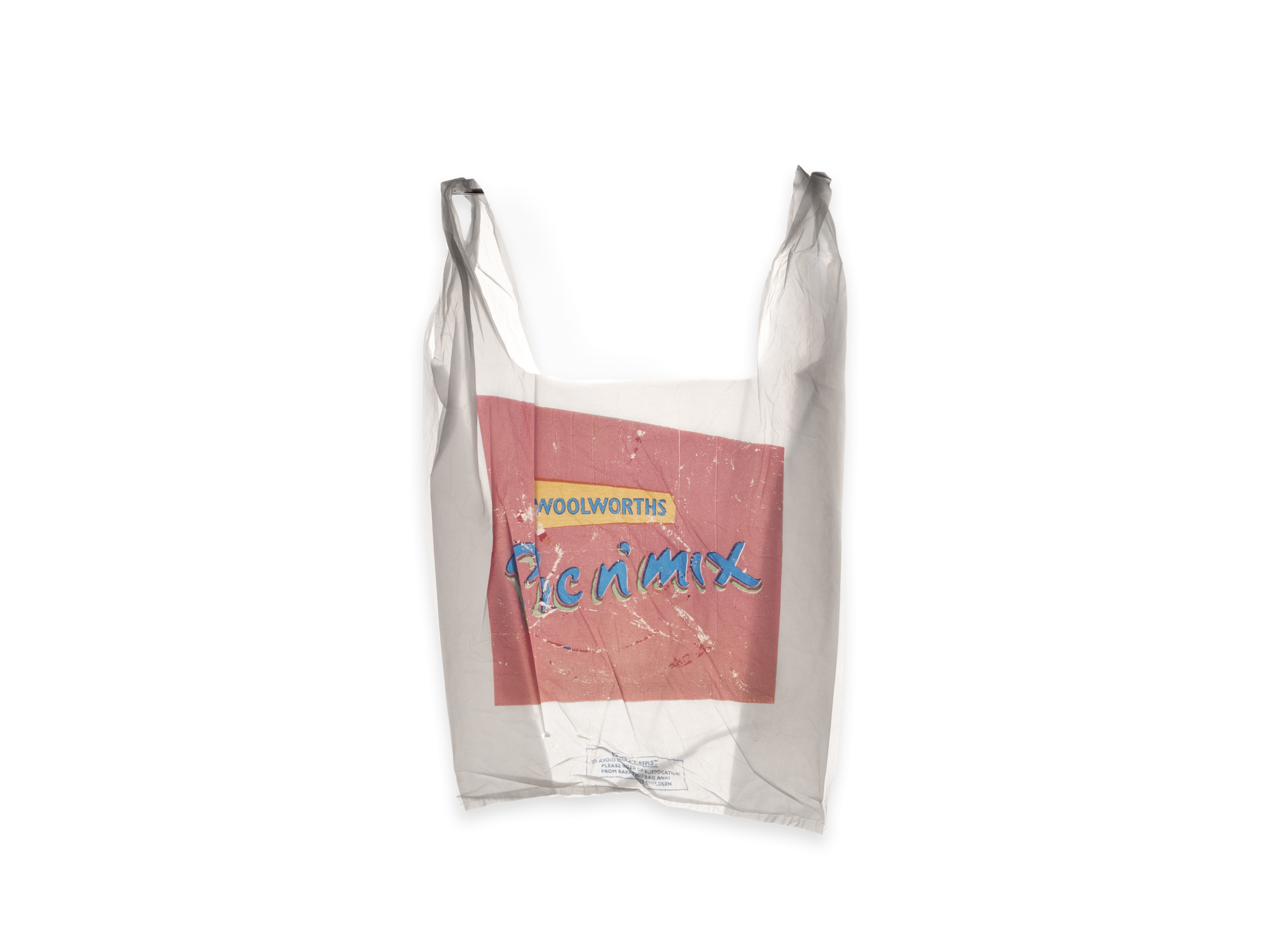
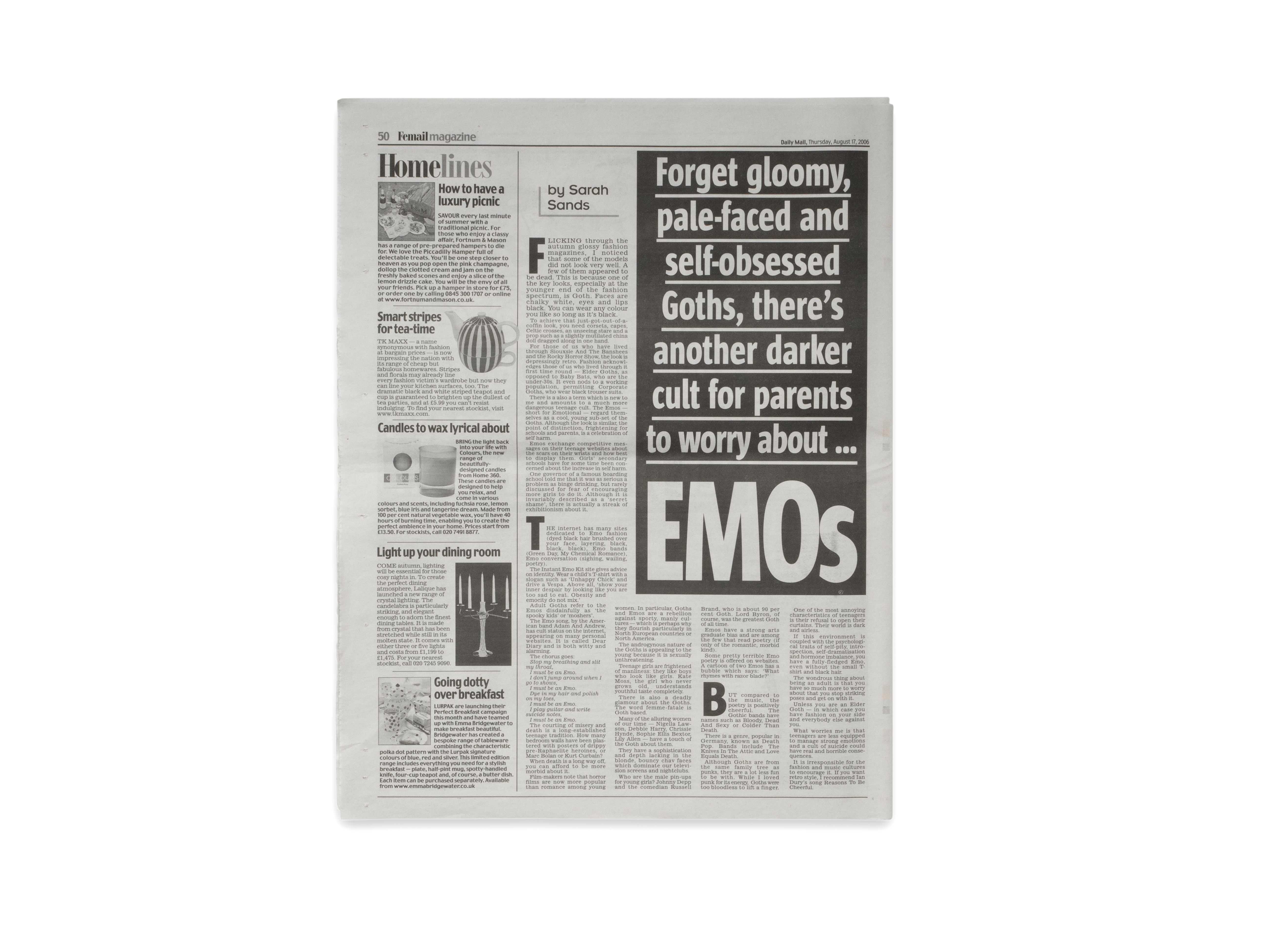


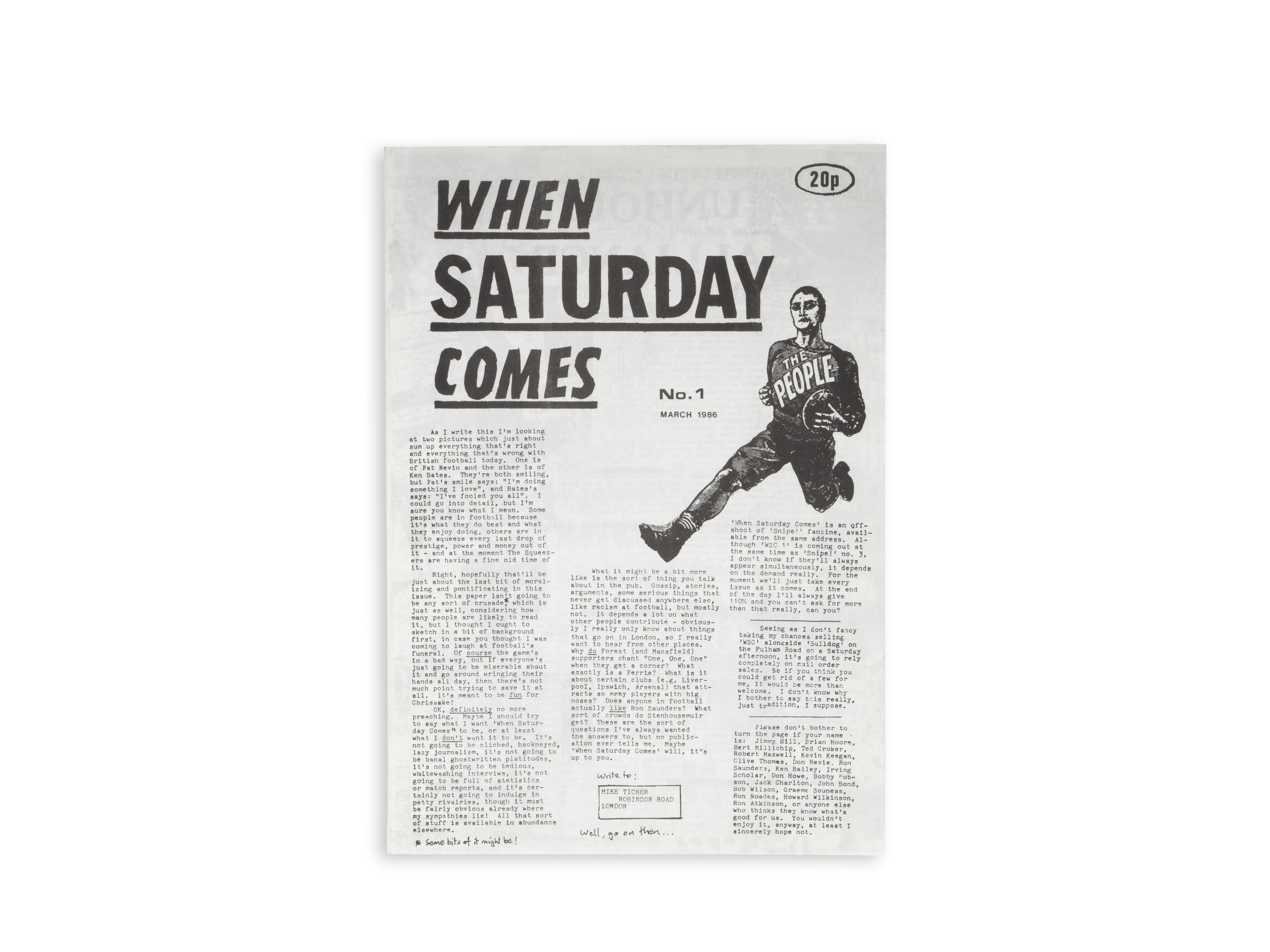
• A 1970s Northern Soul bag, stitched with patches from Wigan Casino all-nighters
• A rare 2000s My Chemical Romance hoodie, iconic within the emo scene
• A Vivienne Westwood Seditionaries bondage trouser from the punk frontline
• A 1990s rave culture board game designed by Jamie Hewlett
• A Sharp GF-777 boombox, a cornerstone of early British hip hop
• A 1970s Raleigh Chopper
• A 2000s grime T-shirt with an all-over print of JME’s face
• And an original 1920s flapper dress, capturing the earliest echoes of modern youth culture expression
Public Uptake & Support
As part of the acquisitions process, we took a direct approach by identifying individuals and communities with relevant objects and reaching out to them as a team effort. This included hours of online research, contacting private sellers, and building relations.
Many of those we contacted responded with genuine interest in the project. Once it became clear that their items were being considered for a national collection, we were surprised to find that sellers often adjusted their prices (sometimes frustatingly low!), offered additional material, or shared personal stories connected to the objects which we have archived. The work also opened up new relationships with potential future contributors.
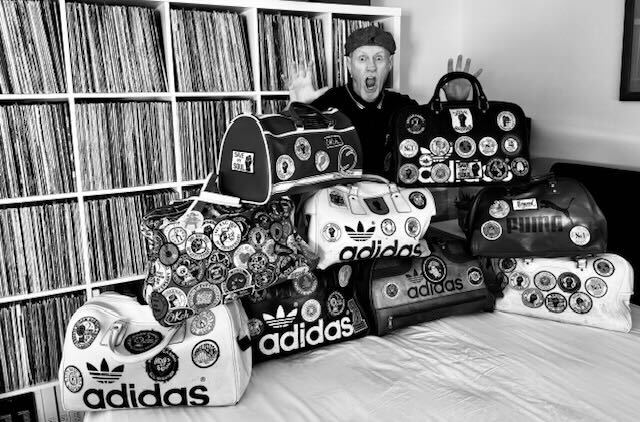
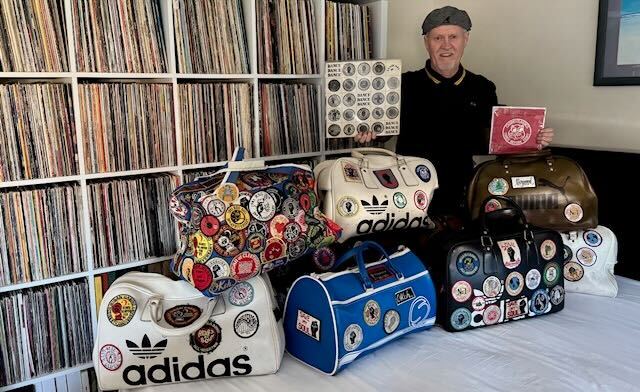
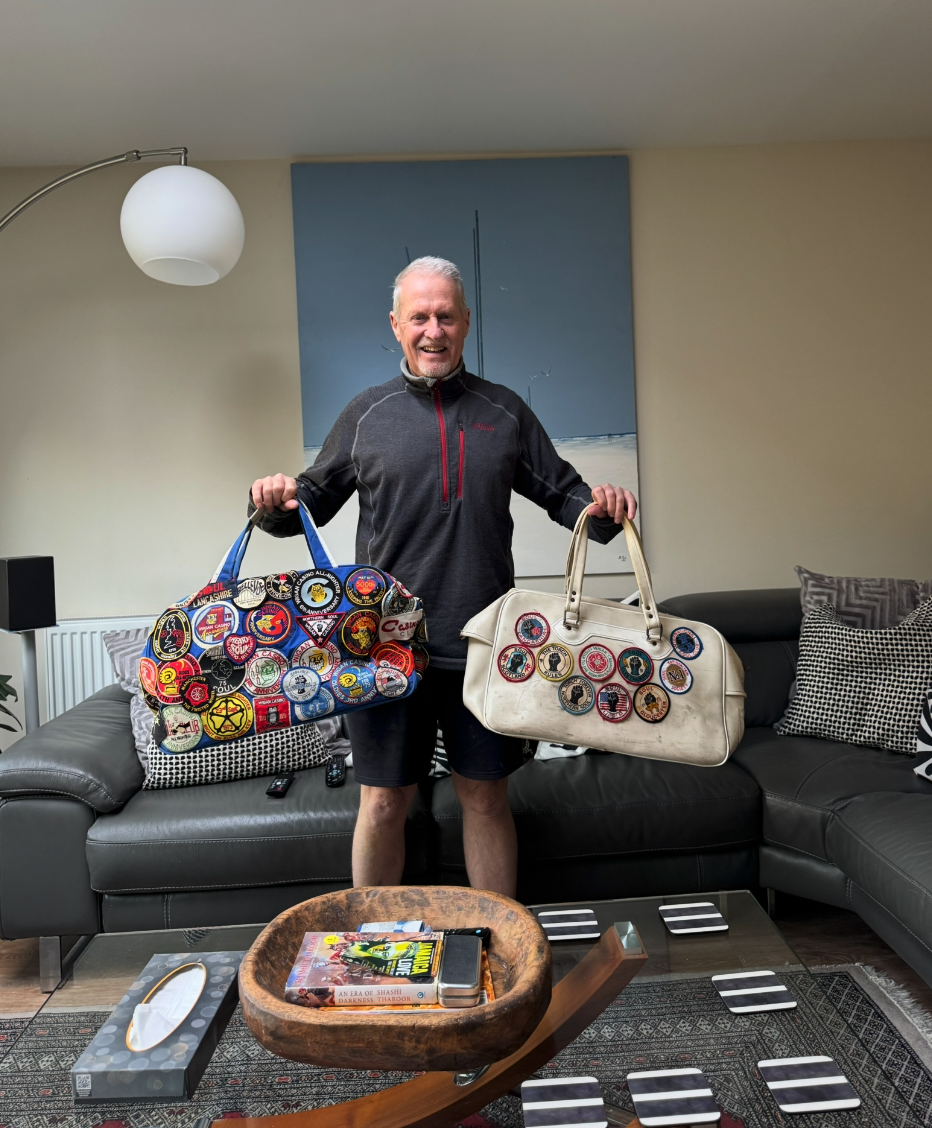
Stephen (pictured), an original Northern Soul scenester, provided a remarkable selection of memorabilia, including bags and ephemera connected to iconic venues like Wigan Casino. Alongside the material, he has shared his memories of travelling to all-nighters, collecting patches, and the community built around the music.
![]()
![]()
![]()
Many of those we contacted responded with genuine interest in the project. Once it became clear that their items were being considered for a national collection, we were surprised to find that sellers often adjusted their prices (sometimes frustatingly low!), offered additional material, or shared personal stories connected to the objects which we have archived. The work also opened up new relationships with potential future contributors.
Stephen (pictured), an original Northern Soul scenester, provided a remarkable selection of memorabilia, including bags and ephemera connected to iconic venues like Wigan Casino. Alongside the material, he has shared his memories of travelling to all-nighters, collecting patches, and the community built around the music.
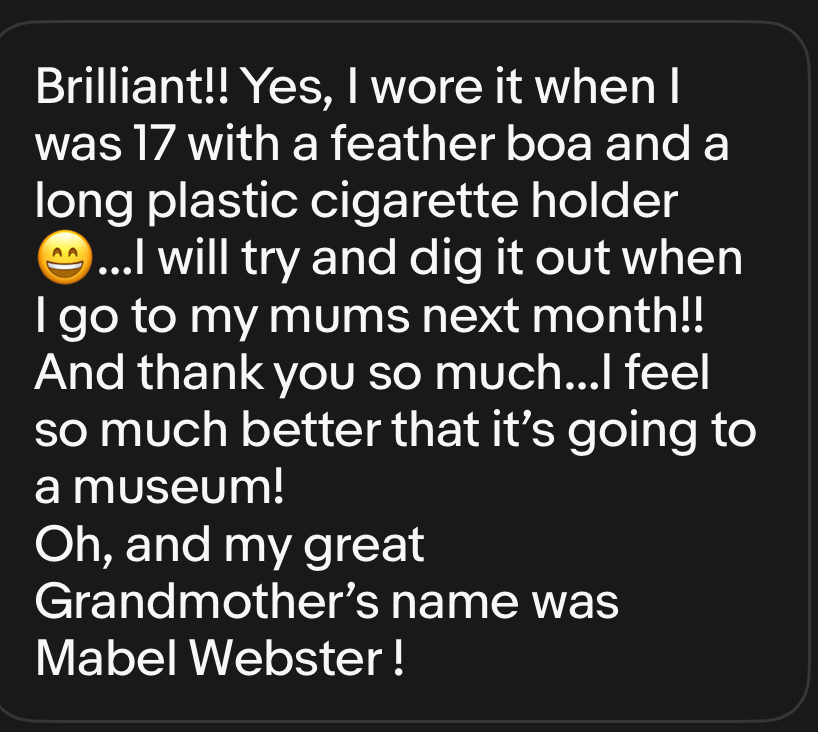

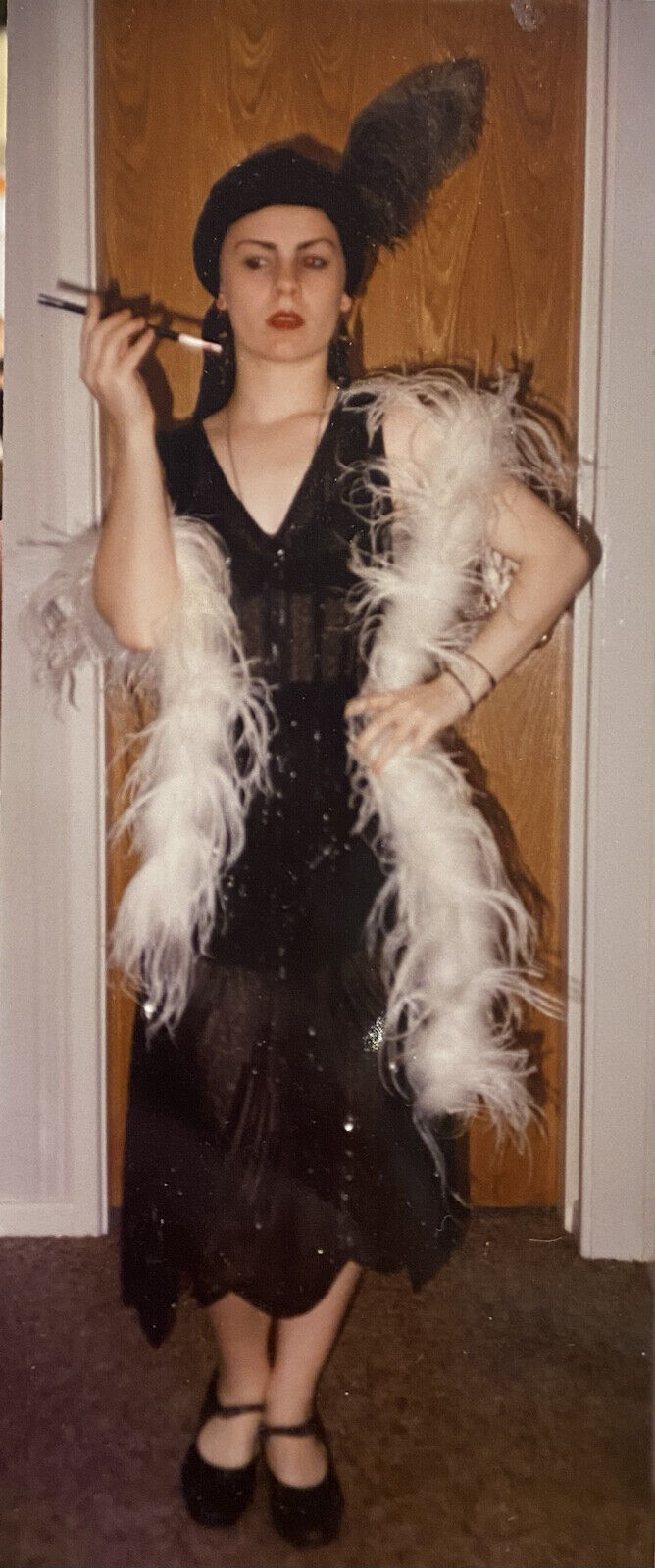

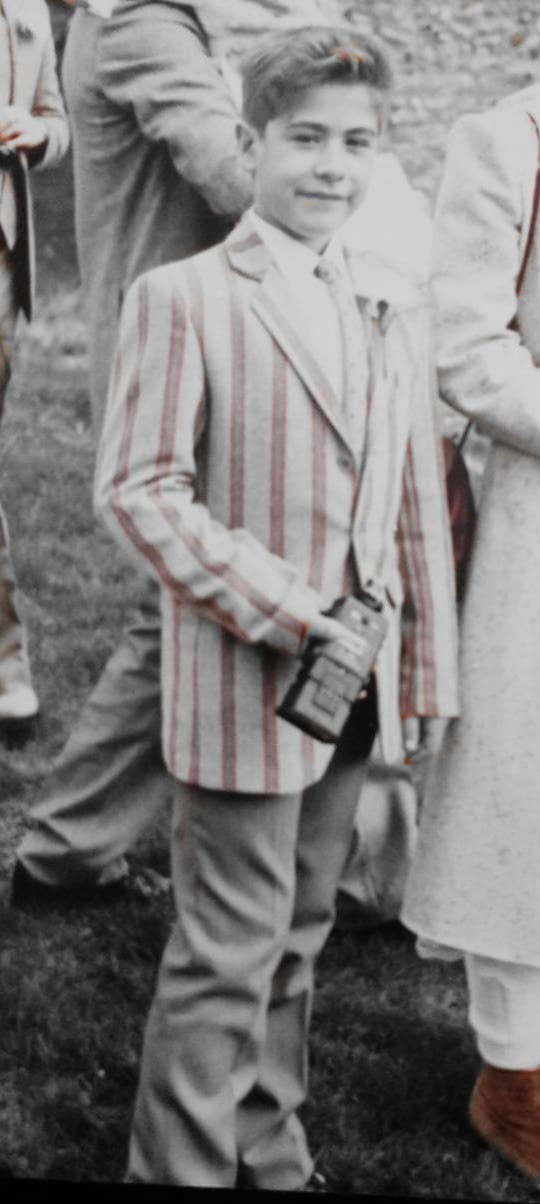



Phillipa (pictured), provided some brilliant photos of herself wearing the flapper dress in the 1980s alongside a photograph of her grandmother, the original owner of the dress.
Street Surveys
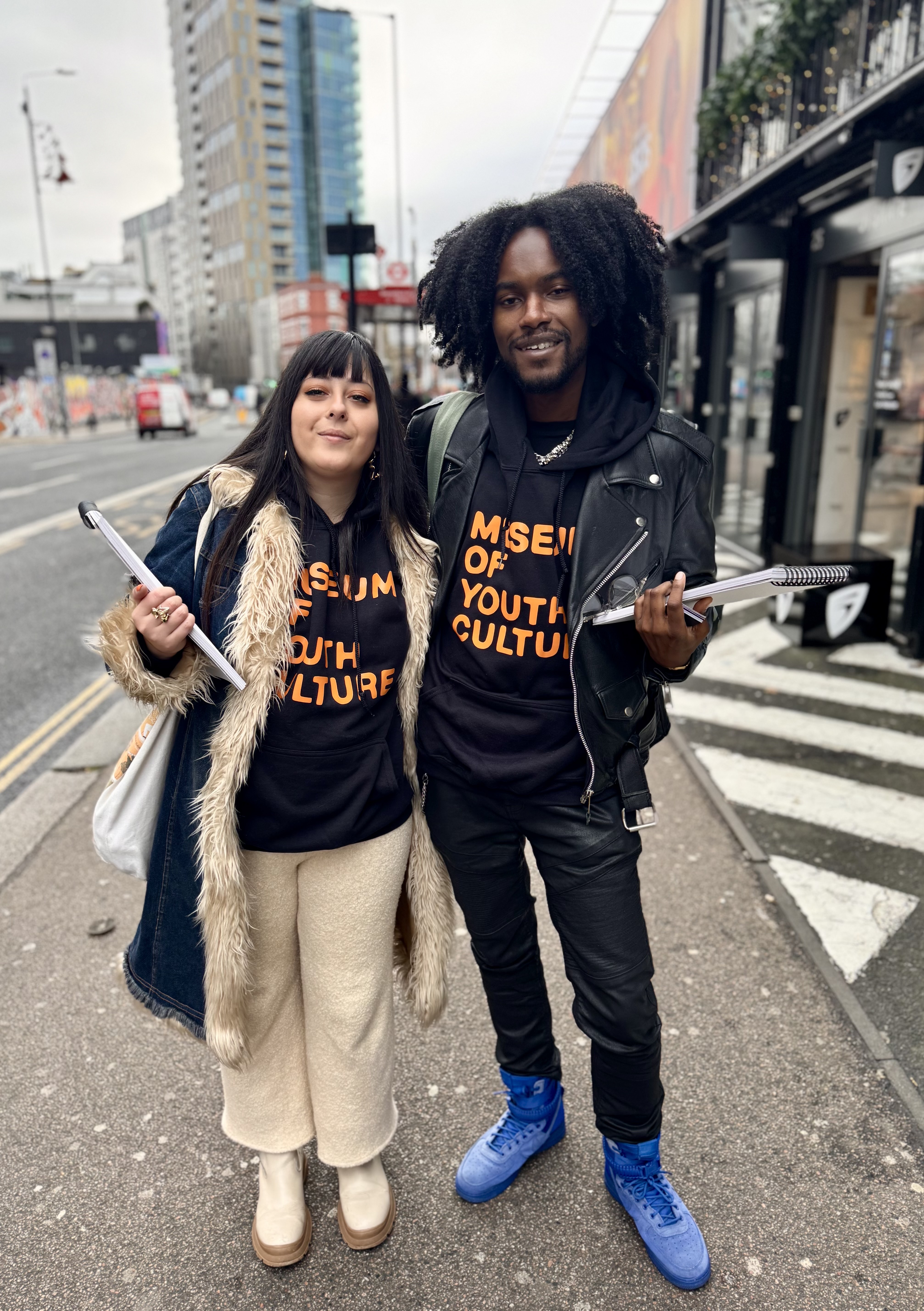
Street surveys played a central role in the object acquisition process, allowing us to gather large-scale public input in a direct and accessible way. These surveys were designed specifically to generate suggestions for youth culture objects — items that people felt should be part of a national collection.
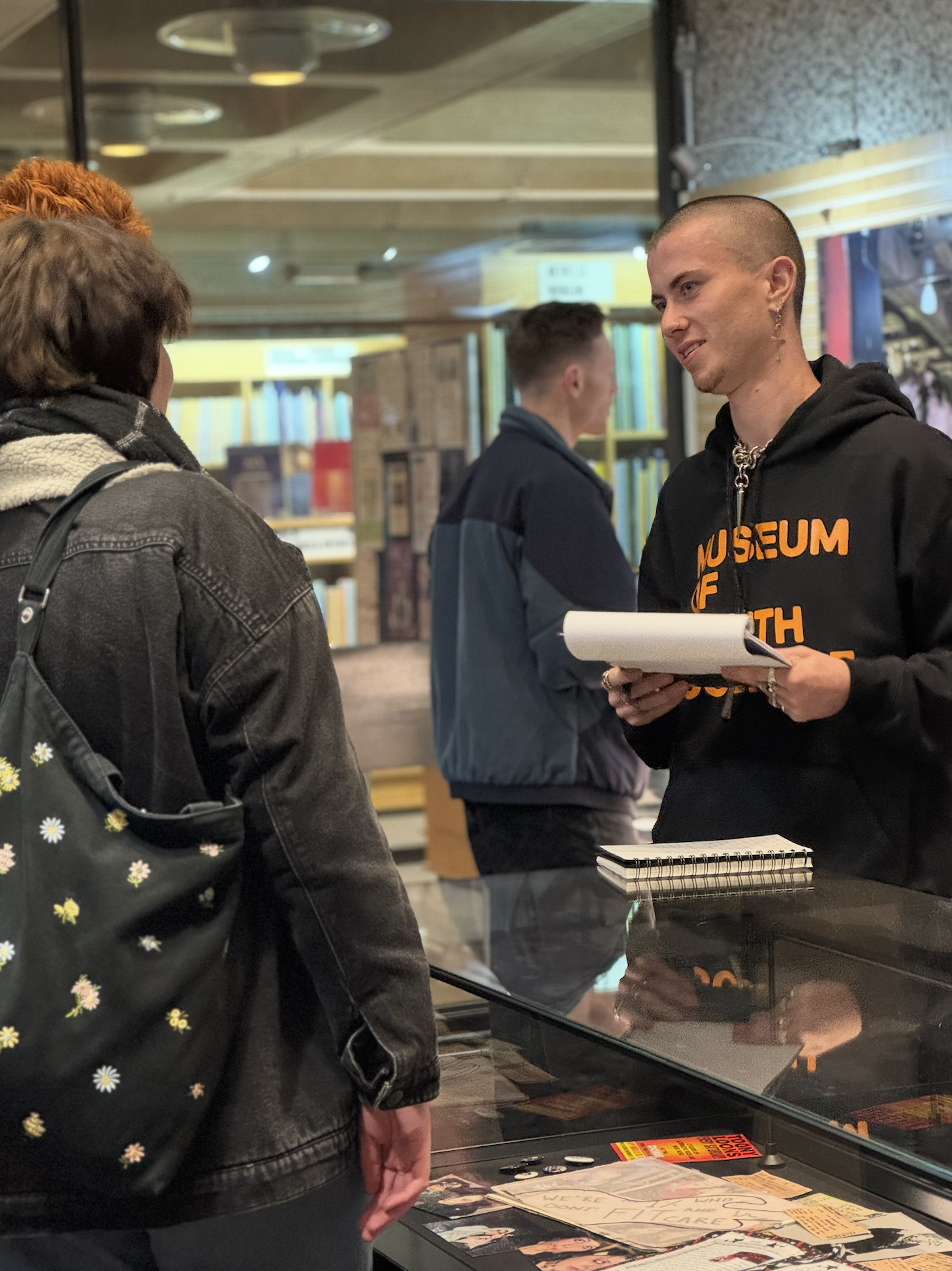
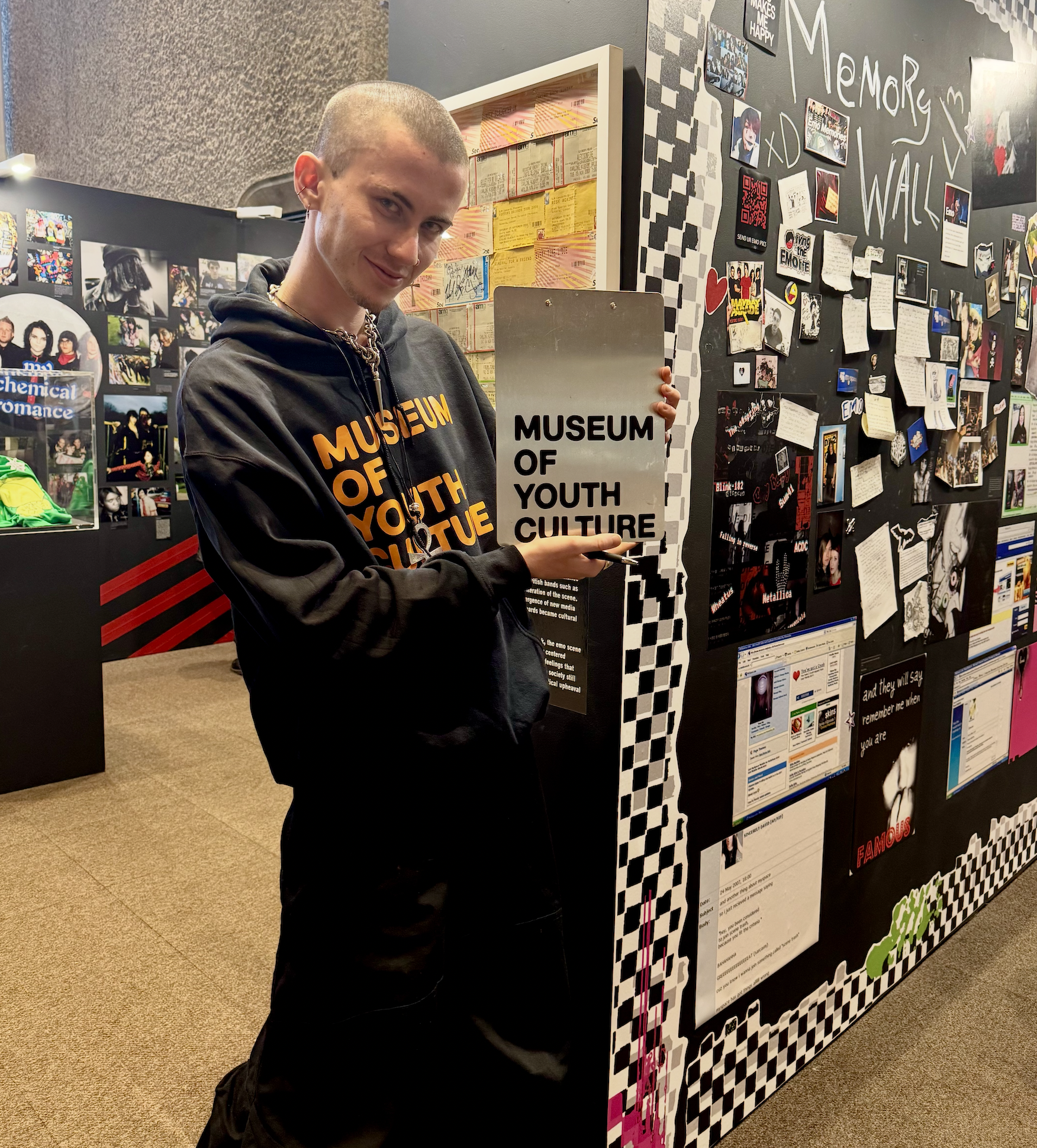
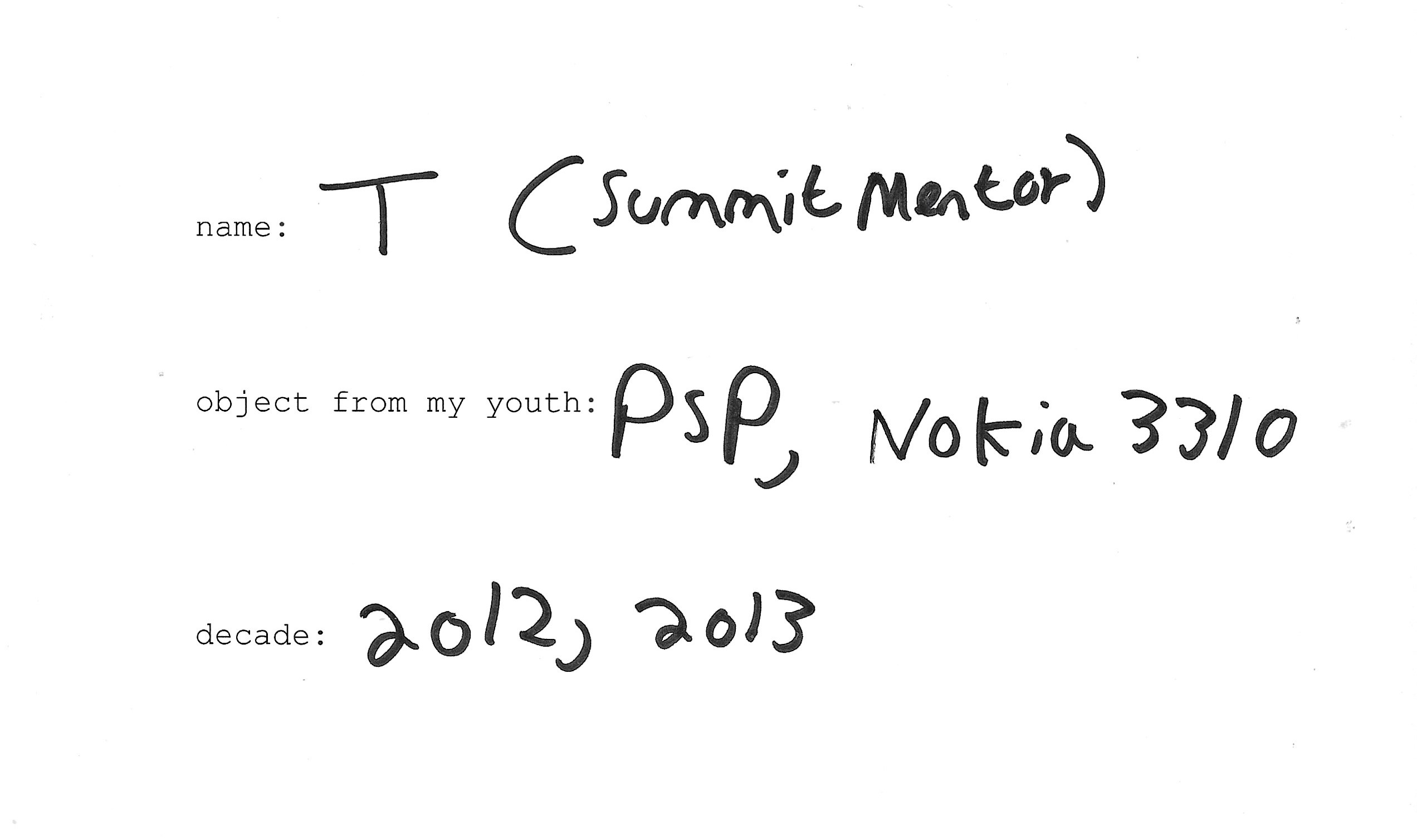
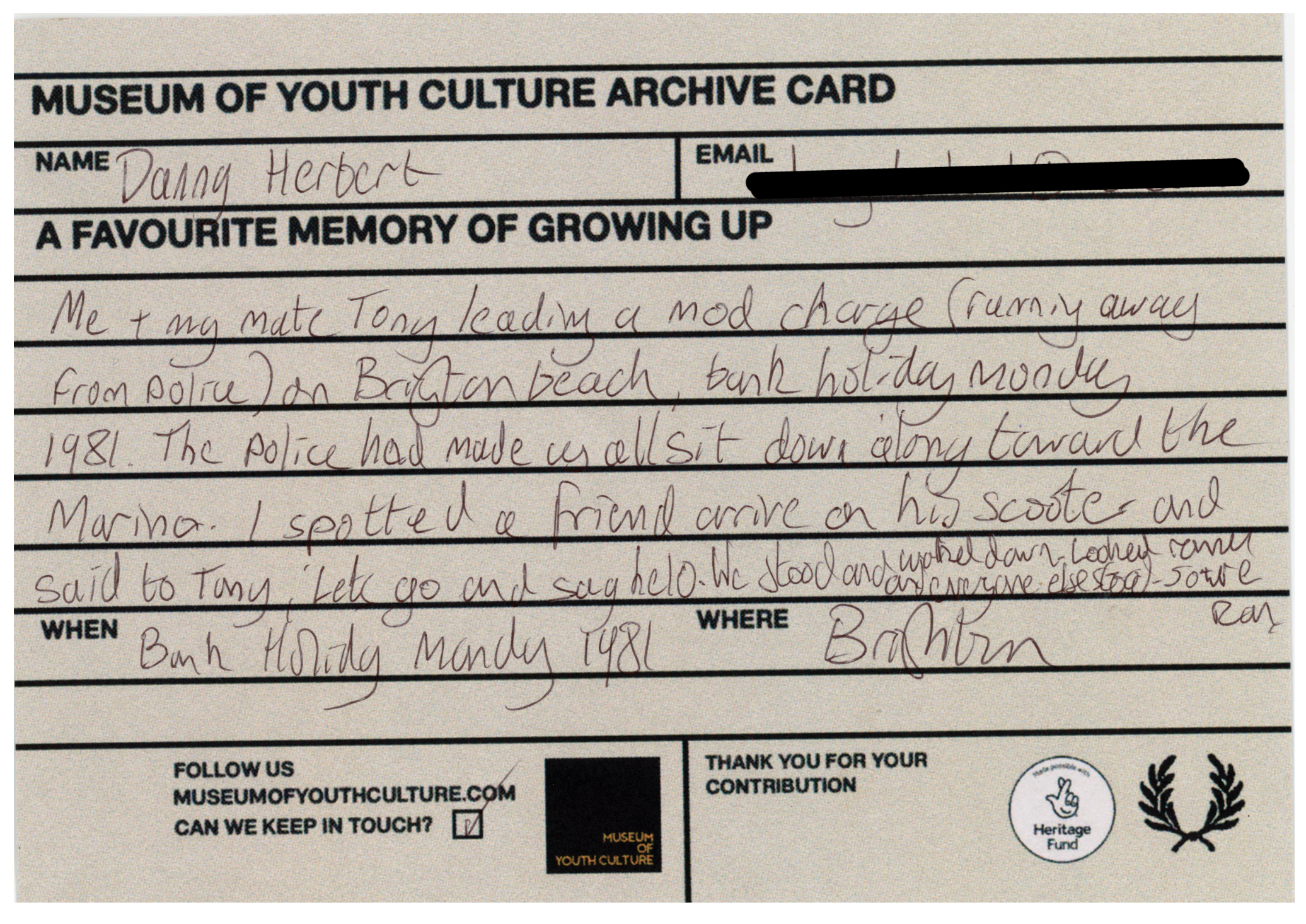 We worked with a team of internally recruited paid street surveyors, recruited through the Museum’s youth networks and trained in the project and heritage interviewing. Branded hoodies and clipboards were created to support visibility and establish credibility in public spaces, helping to build trust during street-level interactions. The design of the surveys was straightforward, encouraging people to reflect on objects that had defined their teenage years — from personal artefacts to everyday ephemera.  To support the process, we created custom archive suggestion cards — simple, tactile tools that allowed the public to write down object ideas quickly and informally. All of these cards are now digitised. |


|
Submission cards were collected at events, festivals, shopping centres and community hubs across three cities, ensuring broad demographic reach. In addition to written contributions, we recorded a series of short-form vox pops. These audio and video clips captured people in their own words, reflecting on the cultural backdrop of the objects they were nominating. The range of responses were funny, heartfelt, unexpected, forming a valuable oral history component that complements the physical archive.  According to Prof Lucy Robinson’s evaluation, this stage of the project significantly expanded public understanding of what counts as heritage. The visibility of the street surveyors, the open structure of the questions, and the physical presence of archive cards helped participants reflect on youth culture as something personal but also worthy of preservation. The surveys also produced a substantial proportion of our 1,786 total nominations, forming the base from which our acquisition shortlist was drawn. 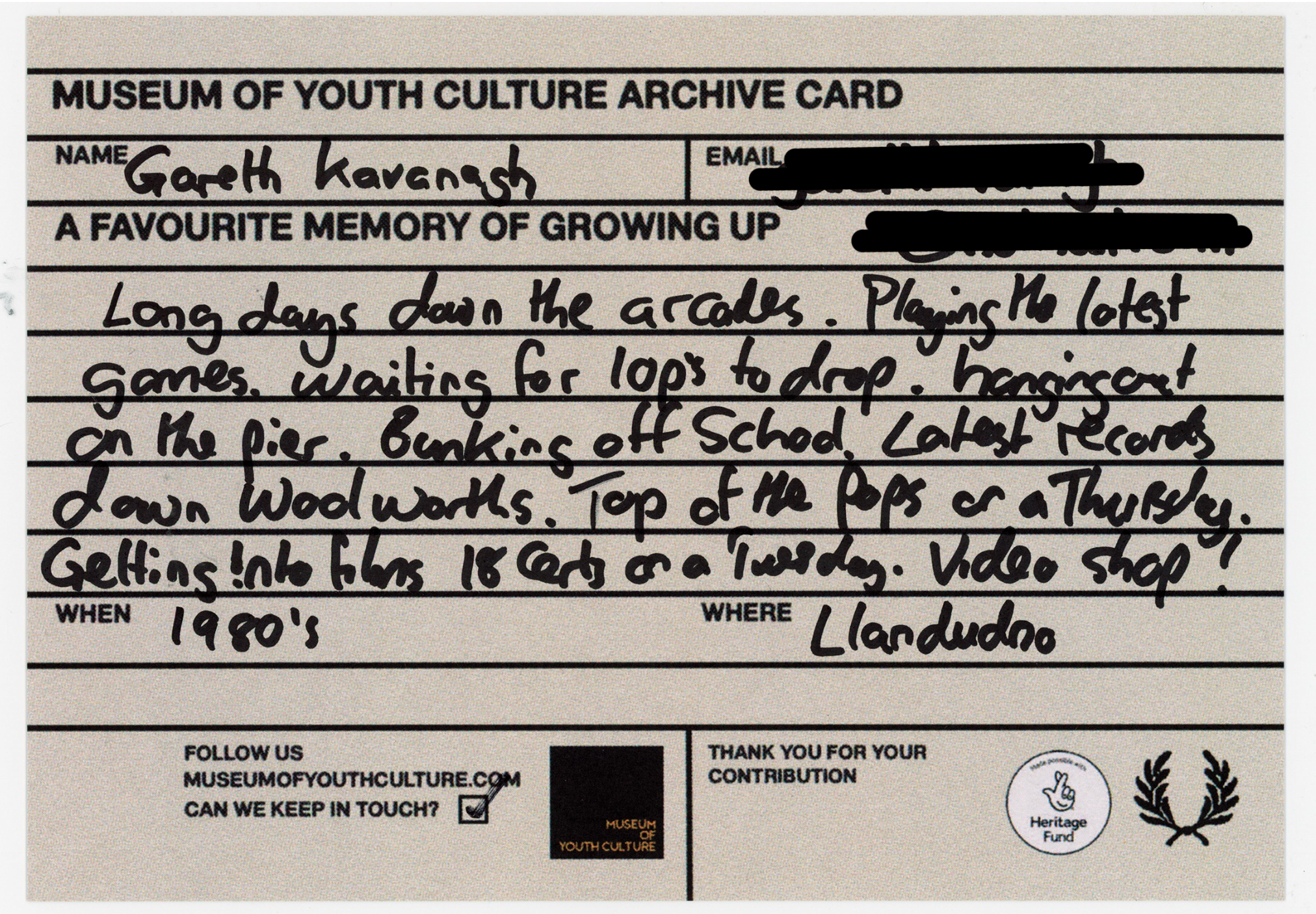 This work has contributed to a wider methodological shift for the Museum. Street-level engagement will now become now a vital part of our toolbox when planning future research. |